
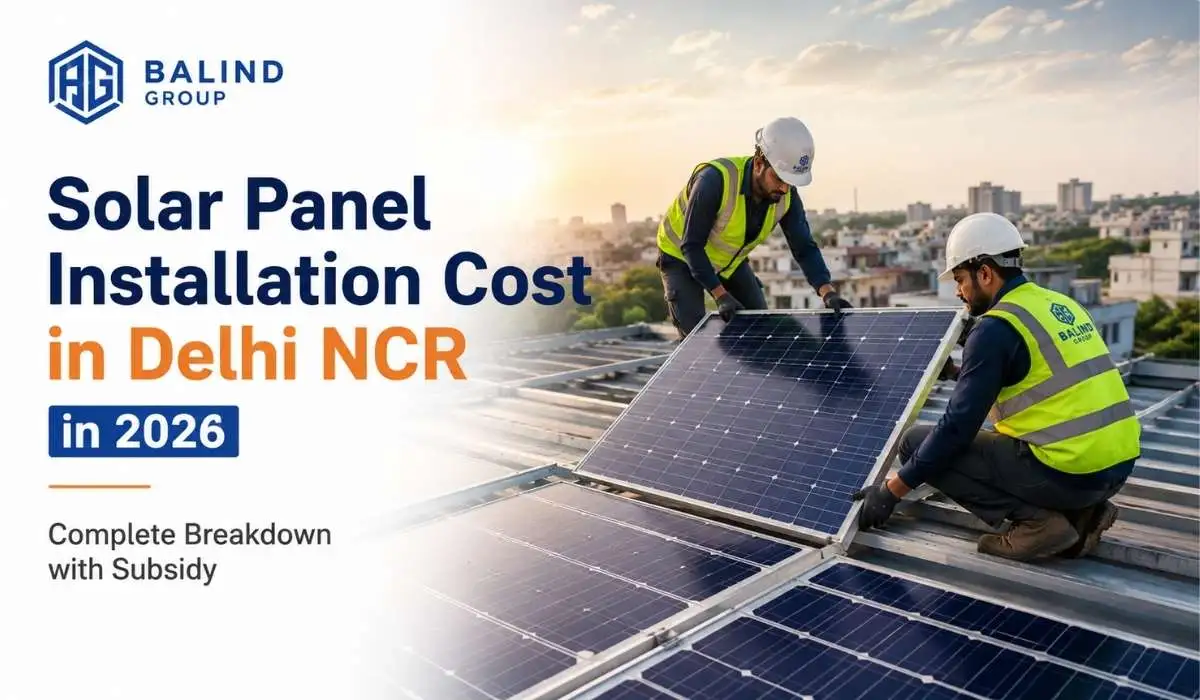
Electricity costs across Delhi NCR have increased steadily over the past few years, making it more expensive for homeowners and businesses to manage their monthly energy bills. Whether you live in Delhi, Gurgaon, Noida, Faridabad, or Ghaziabad, rising power tariffs have encouraged many property owners to look for long-term alternatives. One of the most practical and cost-effective solutions is installing a rooftop solar system.
However, one question comes up before making the switch:
“How much does solar panel installation cost in Delhi NCR?”
The answer isn’t the same for everyone. The total investment depends on your electricity consumption, roof space, system size, equipment quality, installation complexity, and government subsidy eligibility.
The good news is that solar panel prices have become more stable, while government initiatives like the PM Surya Ghar Yojana have made residential solar systems more affordable than ever. Combined with long-term electricity savings, solar has become a smart financial investment rather than just an environmentally friendly choice.
How Much Does Solar Panel Installation Cost in Delhi NCR in 2026?
Solar installation costs vary depending on whether you’re installing a residential, commercial, or industrial system. While every project is different, the average pricing in Delhi NCR falls within the following range.
|
Property Type |
Typical System Size | Estimated Investment |
|
Apartments & Small Homes |
1–3 kW | ₹80,000 – ₹2.1 Lakhs |
|
Independent Homes |
3–10 kW |
₹1.8 – ₹6.7 Lakhs |
| Small Commercial Buildings | 10–30 kW |
₹5.8 – ₹18 Lakhs |
| Factories & Warehouses | 50–100 kW+ |
₹26 Lakhs onwards |
Actual pricing depends on system specifications, roof conditions, and subsidy eligibility.
Although the upfront investment may seem significant, most residential systems recover their cost within 3–5 years, while many commercial installations achieve even faster payback because of higher electricity consumption and available tax benefits.
Need a customized estimate? Instead of relying on generic online calculators, schedule a free site survey with Balind Solar Synergy. Our experts assess your electricity usage, roof conditions, and energy goals before recommending the most suitable system.
Which Solar System Size Is Right for You?
Choosing the correct system size is just as important as knowing the installation cost. Installing a system that’s too small may not offset your electricity bill, while an oversized system could increase your initial investment unnecessarily.
1–2 kW Solar System
Ideal for:
- Small apartments
- 1 BHK homes
- Limited daytime electricity usage
This system can comfortably support lighting, fans, television, Wi-Fi, and other essential household appliances.
3–5 kW Solar System
Best suited for:
- 2–3 BHK homes
- Independent houses
- Villas with moderate electricity consumption
This is one of the most popular residential system sizes because it offers an excellent balance between investment and monthly savings.
If you’re unsure which type of solar system suits your home, read our detailed comparison of On-Grid vs Off-Grid vs Hybrid Solar Systems, where we explain the advantages, limitations, and ideal applications of each option.
10–20 kW Solar System
Suitable for:
- Large homes
- Small offices
- Educational institutions
- Clinics
- Restaurants
- Small commercial establishments
Businesses using electricity throughout the day generally achieve quicker returns from these systems.
25–100 kW and Above
Designed for:
- Manufacturing units
- Warehouses
- Hotels
- Hospitals
- Commercial buildings
- Industrial facilities
These installations significantly reduce operational electricity costs and provide excellent long-term returns.
Businesses interested in reducing energy expenses can also explore our detailed guide on Commercial Solar Panel Installation in Delhi NCR, where we discuss ROI, tax benefits, and project planning for commercial properties.
What Factors Affect Solar Panel Installation Cost in Delhi NCR?
Many homeowners are surprised when they receive different quotations from different solar companies for what appears to be the same system size. That’s because the total installation cost depends on several technical and project-specific factors.
Here are the most important ones.
1. System Size (kW Capacity)
The biggest factor affecting installation cost is the capacity of your solar system.
Larger systems naturally require more panels, bigger inverters, stronger mounting structures, and additional electrical components. While the overall investment increases, the cost per kilowatt generally decreases, making larger systems more economical over time.
2. Solar Panel Technology
Not all solar panels offer the same performance.
Today’s market offers several technologies, including:
- Monocrystalline Solar Panels
- Polycrystalline Solar Panels
- TOPCon Solar Panels
- Bifacial Solar Panels
Premium technologies typically deliver higher efficiency and better long-term energy generation, especially where roof space is limited. Although they may have a higher upfront cost, they often produce greater savings over the system’s lifetime.
3. Inverter Selection
The inverter is the heart of your solar system.
Depending on your requirements, you may choose:
- String Inverter
- Hybrid Inverter
- Micro Inverter
Hybrid inverters generally cost more because they can integrate with battery storage and provide additional flexibility during future upgrades.
4. Roof Type and Installation Complexity
Every rooftop is different.
Installation costs can vary depending on:
- RCC roofs
- Metal sheet roofs
- Roof height
- Accessibility
- Shadow analysis
- Available installation area
Properties requiring customized mounting structures or additional engineering may involve slightly higher installation costs.
5. Net Metering and Local DISCOM Requirements
Your location within Delhi NCR also influences project timelines and documentation.
Each DISCOM follows its own approval process for:
- Net metering
- Inspection
- Documentation
- System commissioning
Experienced solar EPC companies manage these approvals on behalf of customers, making the installation process much smoother.
Why Do Solar Quotes Vary Between Companies?
Many customers receive quotations that differ by ₹30,000, ₹50,000, or even more for the same system capacity. While a lower price may seem attractive, it’s important to understand what’s included in the proposal.
Several factors influence the final quotation, including:
- Quality of solar panels and inverters
- Thickness and durability of the mounting structure
- Installation workmanship
- Electrical protection components
- Engineering and system design
- Warranty coverage
- After-sales service and maintenance
- Assistance with net metering and subsidy documentation
Choosing a reputable installer isn’t just about getting the lowest price, it’s about ensuring your solar system performs efficiently for the next 25 years.
If you’re comparing installers, our guide on How to Find the Best Solar Installation Company in Delhi NCR can help you evaluate experience, product quality, warranties, and long-term support before making your decision.
Solar Panel Installation Cost in Delhi NCR – System Size Wise (2026)
One of the biggest advantages of solar is that there is no one-size-fits-all solution. Whether you want to power a small home or a large manufacturing facility, the system can be designed according to your electricity consumption and budget.
The table below provides an approximate estimate of solar panel installation costs in Delhi NCR. Actual pricing may vary depending on the brand of solar panels, inverter, roof conditions, mounting structure, and subsidy eligibility.
|
System Size |
Estimated Cost (Before Subsidy) | Approximate Cost After Subsidy* | Ideal For |
|
3 kW |
₹1.8L – ₹2.1L | ₹72,000 – ₹1.02L | Small Homes |
|
5 kW |
₹2.8L – ₹3.5L | ₹2L – ₹2.5L | Independent Houses |
|
10 kW |
₹5.8L – ₹6.7L | ₹4L – ₹5L | Large Homes & Offices |
| 20 kW | ₹11L – ₹12.6L | ₹8L – ₹9.5L |
Schools & Commercial Buildings |
| 50 kW | ₹26.5L – ₹30L | ₹20L – ₹22.5L |
Warehouses & Factories |
| 100 kW | ₹52L – ₹60L | ₹40L – ₹45L |
Large Industrial Projects |
Note: Commercial systems generally do not receive residential subsidies above the applicable capacity limits. However, they can benefit from tax incentives and accelerated depreciation.
Instead of selecting a system based only on price, it’s important to consider your monthly electricity usage. A correctly sized system delivers better long-term savings and a faster return on investment.
PM Surya Ghar Subsidy in 2026 – How Much Can You Get?
The PM Surya Ghar: Muft Bijli Yojana has made rooftop solar more affordable for residential consumers by reducing the initial investment required to install an on-grid solar system.
Current Central Subsidy Structure
|
System Capacity |
Subsidy |
|
Up to 2 kW |
₹30,000 per kW |
| Additional capacity up to 3 kW |
₹18,000 per kW |
| Above 3 kW |
Maximum subsidy capped at ₹78,000 |
Important Eligibility Points
- Applicable for residential rooftop solar systems.
- Available only for on-grid solar installations.
- Installation must comply with MNRE guidelines.
- The subsidy is credited directly to the beneficiary’s bank account after successful installation and DISCOM approval.
If you live in Haryana, you can also read our detailed guide on Solar Subsidy in Haryana 2026, where we explain eligibility, documentation, and the complete application process.
Commercial Solar Installation Cost in Delhi NCR
Commercial properties consume significantly more electricity than residential homes, making solar one of the most profitable long-term investments for businesses.
Whether you own a warehouse, manufacturing unit, hotel, school, hospital, or corporate office, installing a commercial solar system can substantially reduce monthly operating expenses.
Unlike residential projects, commercial solar installations are generally evaluated based on return on investment (ROI) rather than just upfront cost.
Businesses may also benefit from:
- Accelerated Depreciation (subject to applicable tax regulations)
- GST Input Credit where applicable
- Lower operating costs
- Reduced dependence on rising electricity tariffs
- Improved sustainability goals
Example ROI for a 100 kW Commercial Solar System
|
Particular |
Approximate Value |
|
Project Cost |
₹55,00,000 |
|
GST Input Credit |
(-) ₹6,68,000 |
| Accelerated Depreciation |
(-) ₹17,30,000 |
| Annual Electricity Savings |
₹14,00,000 |
| Effective Payback |
Around 2–3 Years |
If you’re evaluating solar for your business, read our comprehensive guide on Commercial Solar Panel Installation in Delhi NCR, where we discuss project planning, tax benefits, and long-term savings in greater detail.
What Is Included in the Solar Installation Cost?
Many people assume that the quoted price only covers the solar panels. In reality, a professionally installed rooftop solar system includes several important components and services.
A typical installation package includes:
- High-efficiency solar panels
- Solar inverter
- Galvanized mounting structure
- DC and AC wiring
- Earthing and safety protection
- Net metering documentation
- Installation and commissioning
- Performance testing
- Basic system training
Additional Costs That May Apply
Depending on your property, there may be extra work required, such as:
- Structural reinforcement for older roofs
- Civil work or waterproofing
- Battery storage (for hybrid or off-grid systems)
- Optional Annual Maintenance Contracts (AMC)
Choosing a trusted Solar EPC company ensures that every component is properly designed, installed, and tested for long-term performance rather than focusing only on the lowest quotation.
In the next section, we’ll calculate monthly savings, payback period, and long-term returns to help you understand how quickly a solar system pays for itself. We’ll also explain the complete installation process and why thousands of homeowners and businesses choose Balind Solar Synergy for their solar projects.
Is Solar Still Worth Installing in 2026?
The simple answer is yes.
Solar has become one of the most reliable long-term investments for both homeowners and businesses because of three major reasons:
1. Rising Electricity Tariffs
Electricity prices continue to increase almost every year. Installing solar allows you to generate your own electricity and reduce dependence on the grid.
2. Government Support
Residential consumers can still benefit from subsidy programs such as the PM Surya Ghar Yojana, reducing the initial investment.
3. Long-Term Savings
Unlike many home improvement projects, a rooftop solar system continues to generate financial returns for decades.
Besides reducing electricity bills, solar also:
- Increases property value
- Supports clean energy goals
- Protects against future tariff hikes
- Requires relatively low maintenance
- Provides dependable long-term performance
Why Choose Balind Solar Synergy?
Choosing the right installer is just as important as choosing the right solar system.
At Balind Solar Synergy, we focus on delivering reliable, high-performance solar solutions backed by quality engineering and transparent service.
Why Customers Trust Us
- 8+ Years of Solar EPC Experience
- 1000+ Successful Installations
- Government-Approved Vendor
- Complete Residential & Commercial Solar Solutions
- In-House Engineering & Design Team
- Premium Tier-1 Solar Panels & Inverters
- Net Metering & Subsidy Assistance
- Fast Project Execution
- 25-Year Performance Warranty on Panels
- AMC & After-Sales Support
- Serving Delhi, Gurgaon, Noida, Faridabad & Ghaziabad
Whether you’re planning a small residential installation or a large commercial project, our team manages the entire process, from consultation to commissioning.
Ready to switch to solar?
Contact Balind Solar Synergy today to schedule your Free Site Survey and receive a customized quotation based on your property’s energy requirements.
Frequently Asked Questions
1. What is the average cost of a 5 kW solar system in Delhi NCR?
A 5 kW rooftop solar system generally costs between ₹2.8 lakh and ₹3.5 lakh before subsidy. The final investment depends on the quality of components, roof conditions, and subsidy eligibility.
2. How much subsidy can I get under the PM Surya Ghar Yojana?
Eligible residential consumers can receive central financial assistance as per the latest government guidelines, with subsidy available for qualifying on-grid rooftop solar systems.
3. Is the installation cost the same in Delhi, Gurgaon, and Noida?
The base equipment cost is generally similar, but factors such as DISCOM procedures, local policies, and project requirements can influence the overall installation cost.
4. Does Balind Solar Synergy help with subsidy paperwork?
Yes. We assist eligible customers with documentation, DISCOM approvals, net metering, and subsidy-related processes to ensure a smooth installation experience.
5. How much roof space is required for solar panels?
As a general guideline, a 1 kW rooftop solar system requires approximately 80–100 square feet of shadow-free roof space. Larger systems require proportionally more area.
6. Can I install solar panels on an older building?
Yes, provided the roof is structurally suitable. During the site survey, our engineers inspect the roof and recommend any modifications if required.
7. How long does solar installation take?
Most residential installations are completed within a few days after approvals, while larger commercial projects may require additional time depending on project size and site conditions.
Conclusion
Installing a rooftop solar system in 2026 is no longer just about reducing your carbon footprint, it’s a smart financial investment that can lower electricity bills, improve energy independence, and deliver long-term savings.
While the exact solar panel installation cost in Delhi NCR depends on system size, equipment, and subsidy eligibility, choosing a reliable Solar EPC company ensures you receive maximum value from your investment.
At Balind Solar Synergy, we provide complete end-to-end solar solutions for homeowners, businesses, institutions, and industries across Delhi, Gurgaon, Noida, Faridabad, and Ghaziabad. From system design and subsidy assistance to professional installation and ongoing support, our experienced team is with you every step of the way.
No responses yet