

The cost of electricity has been increasing steadily across India, making it difficult for many households to manage their monthly power bills. At the same time, the Government of India is actively promoting renewable energy to reduce dependence on conventional power sources and encourage clean, sustainable electricity generation.
To support this vision, the government launched the PM Surya Ghar: Muft Bijli Yojana, one of India’s largest rooftop solar initiatives for residential consumers. The scheme provides financial assistance to eligible homeowners for installing rooftop solar systems, making solar energy more affordable and accessible.
The scheme aims to benefit one crore households by promoting rooftop solar adoption while reducing electricity expenses.
If you’re planning to install a rooftop solar system, this guide explains everything you need to know about the PM Surya Ghar Yojana, including eligibility, subsidy amounts, benefits, required documents, and the complete application process.
What is PM Surya Ghar Muft Bijli Yojana?
The PM Surya Ghar: Muft Bijli Yojana is a flagship rooftop solar scheme launched by the Government of India to encourage homeowners to install grid-connected rooftop solar systems on their houses.
Under this scheme, eligible residential consumers receive Central Financial Assistance (CFA) to reduce the upfront cost of installing rooftop solar panels. The subsidy is directly transferred to the beneficiary’s bank account after successful installation, inspection, and commissioning through the concerned DISCOM.
The scheme has been introduced with several important objectives:
- Increase the adoption of rooftop solar across India.
- Reduce electricity expenses for households.
- Promote the use of clean and renewable energy.
- Lower carbon emissions.
- Strengthen India’s transition towards energy independence.
Unlike earlier subsidy programs, the PM Surya Ghar Yojana offers a streamlined online application process, making it easier for homeowners to apply, track their application, and receive subsidy benefits.
Key Benefits of PM Surya Ghar Yojana
The PM Surya Ghar Yojana has been designed to make rooftop solar affordable for ordinary homeowners. Apart from reducing installation costs, the scheme offers several long-term benefits.
1. Government Subsidy on Rooftop Solar Installation
The biggest advantage is the financial assistance provided by the Central Government. Eligible homeowners can significantly reduce their initial investment through the subsidy available under the scheme.
2. Lower Monthly Electricity Bills
A rooftop solar system generates electricity during the day, reducing the amount of electricity you purchase from the grid. Depending on your system size and electricity consumption, you can reduce your electricity bills by up to 70–90%.
3. Long-Term Savings
Although installing solar panels requires an upfront investment, most residential systems recover their cost within a few years. After that, homeowners continue to enjoy substantial savings throughout the system’s lifespan, which is typically 25 years or more.
4. Environment-Friendly Energy
Solar power is one of the cleanest sources of electricity. By installing rooftop solar panels, households contribute to reducing carbon emissions while supporting India’s renewable energy goals.
5. Increased Property Value
Homes equipped with rooftop solar systems are often considered more energy-efficient and attractive to buyers because of their lower operating costs and long-term savings potential.
6. Reliable Power Generation
A professionally designed on-grid solar system generates electricity throughout the day, helping reduce dependence on rising electricity tariffs. If paired with battery storage through a hybrid system, homeowners can also improve power availability during outages.
If you’re unsure which type of solar system is suitable for your home, read our detailed guide on On-Grid vs Off-Grid vs Hybrid Solar Systems to understand the differences before making your decision.
Documents Required for PM Surya Ghar Yojana Application
Before starting your application, it’s a good idea to keep all the required documents ready. Having the correct documents helps avoid delays during verification, technical approval, and subsidy processing.
Although the exact requirements may vary slightly depending on your DISCOM, most applicants will need the following documents.
| Document | Purpose |
| Aadhaar Card | Identity verification |
| PAN Card | Financial verification (where applicable) |
| Latest Electricity Bill | Consumer number & connection details |
| Proof of Property Ownership | Confirms ownership of the rooftop |
| Passport-size Photograph | Applicant identification |
| Mobile Number | OTP verification & updates |
| Email Address | Registration and communication |
| Bank Passbook/Cancelled Cheque | Direct subsidy transfer |
Pro Tip: Ensure the name on your electricity bill, Aadhaar card, and bank account matches to avoid delays during subsidy processing.
Step-by-Step PM Surya Ghar Yojana Application Process
The PM Surya Ghar Yojana has simplified the rooftop solar application process through an online portal. Once your application is approved, your selected vendor installs the system, after which the subsidy is credited directly to your bank account.
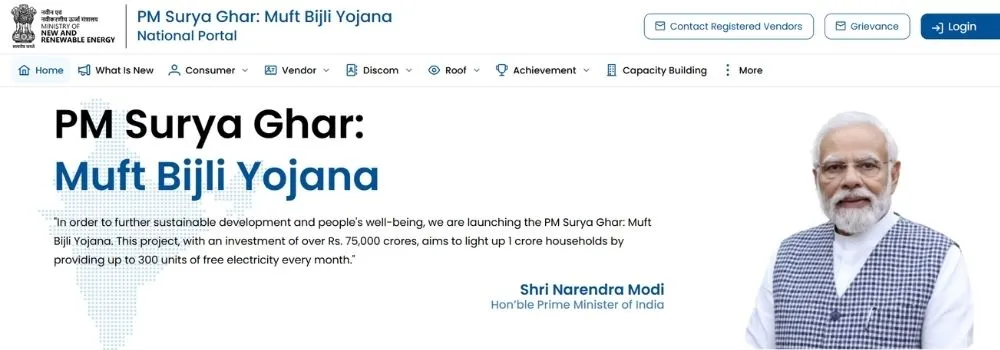
Here’s the complete process.
Step 1: Register on the PM Surya Ghar Portal
Visit the official PM Surya Ghar portal and create your account.
During registration you’ll need to select:
- State
- Electricity Distribution Company (DISCOM)
- Electricity Consumer Number
- Mobile Number
- Email Address
After verification, you can log in and begin your application.
Step 2: Submit Your Rooftop Solar Application
After logging in:
- Fill in your personal details.
- Enter property information.
- Upload the required documents.
- Submit the rooftop solar application.
The portal forwards your application to your respective DISCOM for review.
Step 3: Technical Feasibility Approval
Your electricity distribution company evaluates whether your rooftop is suitable for installing a grid-connected rooftop solar system.
The approval generally considers:
- Existing electricity connection
- Available rooftop space
- Grid compatibility
- Technical feasibility
Only after receiving this approval should you proceed with installation.
Step 4: Select an Approved Solar Vendor
Once feasibility approval is received, choose an MNRE-approved solar installation company to execute the project.
Working with an experienced EPC company ensures:
- Proper system design
- High-quality components
- Safe installation
- Assistance with documentation
- Smooth coordination with DISCOM
At Balind Solar Synergy, we help customers throughout the entire process, from site survey and system design to installation, net metering, and subsidy assistance, making the transition to solar simple and hassle-free.
Step 5: Rooftop Solar Installation
After vendor selection, the installation process begins.
A professional installation typically includes:
- Detailed site survey
- System design
- Mounting structure installation
- Solar panel installation
- Inverter installation
- Electrical wiring
- Earthing
- Safety checks
- Performance testing
Most residential rooftop solar systems can be installed within a few days, depending on the project size and site conditions.
Step 6: Apply for Net Metering
Once the rooftop solar system has been installed, details of the installation are uploaded to the portal for net meter application.
Net metering allows excess electricity generated by your solar system to be exported to the electricity grid, helping reduce your overall electricity bill.
If you’re new to rooftop solar, understanding the difference between on-grid, off-grid, and hybrid solar systems can help you choose the right solution before installation.
Step 7: Inspection & Commissioning
Your DISCOM schedules an inspection to verify that the solar installation complies with technical requirements.
During this stage, officials check:
- Solar panel installation
- Electrical connections
- Safety standards
- Net meter installation
- Overall system compliance
After successful verification, the system is commissioned and a commissioning certificate is generated.
Step 8: Receive Your PM Surya Ghar Subsidy
The final step is subsidy disbursement.
After commissioning:
- Upload your bank account details.
- Submit the cancelled cheque/passbook (if required).
- Complete the final verification.
Once approved, the subsidy amount is transferred directly to your registered bank account as per the applicable government guidelines.
How Much Does a Rooftop Solar System Cost After PM Surya Ghar Subsidy?
Government subsidy significantly reduces the upfront investment for eligible residential consumers.
Here’s an approximate comparison.
| System Size | Approximate Cost Before Subsidy | Approximate Subsidy | Estimated Cost After Subsidy* |
| 2 kW | ₹1.3–₹1.6 Lakhs | Up to ₹60,000 | Lower overall investment |
| 3 kW | ₹1.8–₹2.1 Lakhs | Up to ₹78,000 | Reduced installation cost |
| 5 kW | ₹2.8–₹3.5 Lakhs | Maximum ₹78,000 | Better long-term ROI |
*Actual pricing depends on component selection, installation requirements, and applicable government guidelines.
For a detailed cost comparison, city-wise pricing, ROI, and savings, explore our Solar Panel Installation Cost in Delhi NCR guide.
Why Choose Balind Solar Synergy for Your PM Surya Ghar Solar Installation?
Choosing the right solar partner is essential to maximize your investment and enjoy a hassle-free installation experience.
At Balind Solar Synergy, we provide complete end-to-end rooftop solar solutions, from free site surveys and customized system design to professional installation, net metering, and PM Surya Ghar subsidy assistance.
Our experienced Solar EPC team ensures every system is designed for maximum energy generation, long-term reliability, and faster ROI. We use high-quality solar panels, inverters, and mounting structures backed by professional workmanship and dedicated after-sales support.
Whether you need help selecting the right system, completing DISCOM approvals, or applying for the PM Surya Ghar subsidy, our experts guide you through every step. Contact Balind Solar Synergy today for a free site survey and personalized rooftop solar solution.
If you’re still comparing different options, our guide on How to Find the Best Solar Installation Company in Delhi NCR will help you understand what to look for before making your final decision.
Conclusion
The PM Surya Ghar Yojana has made rooftop solar more affordable than ever by reducing the upfront investment required for homeowners. Combined with lower electricity bills, long-term savings, and reliable clean energy, it offers an excellent opportunity to invest in your home’s future.
However, installing a rooftop solar system involves more than just applying for a subsidy. Choosing the right system size, using quality components, and working with an experienced Solar EPC company are equally important to ensure maximum performance and long-term value.
At Balind Solar Synergy, we simplify the entire journey, from helping you understand the PM Surya Ghar Yojana and completing the documentation to designing, installing, and commissioning your rooftop solar system. Our team also assists with net metering and subsidy-related formalities, so you can enjoy a seamless experience from start to finish.
Frequently Asked Questions:
1. What is PM Surya Ghar Muft Bijli Yojana?
PM Surya Ghar Muft Bijli Yojana is a Government of India initiative that promotes rooftop solar adoption by providing financial assistance to eligible residential consumers for installing grid-connected rooftop solar systems.
2. Who is eligible for PM Surya Ghar Yojana?
Indian homeowners with a valid residential electricity connection and suitable rooftop space can generally apply, provided they meet the latest eligibility criteria specified under the scheme.
3. How much subsidy can I receive under PM Surya Ghar Yojana?
The subsidy depends on the installed system capacity. Currently, eligible residential consumers can receive up to ₹78,000 as Central Financial Assistance, subject to prevailing government guidelines.
4. Can I apply for PM Surya Ghar Yojana online?
Yes. The application process is completed online through the official PM Surya Ghar portal, where applicants can register, submit documents, and track their application status.
5. Is the subsidy available for commercial solar installations?
No. The PM Surya Ghar Yojana is primarily intended for eligible residential rooftop solar installations. Commercial and industrial projects generally do not qualify under this residential subsidy scheme, although they may benefit from other applicable incentives and tax benefits.
If you’re planning solar for your business, explore our Commercial Solar Panel Installation Services to learn about commercial project benefits and return on investment.
6. How long does it take to receive the subsidy?
After successful installation, DISCOM inspection, commissioning, and submission of bank account details, the subsidy is credited directly to the beneficiary’s bank account according to the applicable government process.
7. Can Balind Solar Synergy help with the entire process?
Yes. We assist homeowners with system selection, rooftop assessment, documentation, subsidy guidance, installation, net metering, and post-installation support, providing a complete end-to-end solar solution.
8. Which type of solar system is eligible for PM Surya Ghar subsidy?
The scheme is generally applicable to eligible grid-connected (on-grid) rooftop solar systems installed according to the latest government guidelines.
9. How much roof space is required for rooftop solar?
The space requirement depends on the system size. As a general estimate, around 80–100 sq. ft. of shadow-free rooftop area is required for every 1 kW of solar capacity.
10. How do I know which solar system is right for my home?
The ideal system depends on your monthly electricity consumption, available rooftop area, future energy needs, and budget. A professional site survey helps determine the most suitable capacity for your property.
No responses yet